


The Row Purse Collection Minimalist Tailoring
Đăng bởi noidung - 22:51 24/11/2026
The Row: A Quick Look Back at its Olsen Twins Minimalist Luxury Fashion Line
Mary-Kate and Ashley Olsen did not set out to become the reigning architects of quiet luxury when they founded The Row in 2006. The label emerged from a personal frustration: the twins, already veterans of the entertainment industry since childhood, wanted a white t-shirt that actually fit well and lasted. That search for the perfect basic became the founding principle of a brand that now sits at the top of the fashion hierarchy, commanding prices and waitlists that rival houses with a century more history behind them.
That very name stands as a subtle wink and an earnest tribute. Its name and ethos were inherited from Savile Row, the London street linked with bespoke tailoring.. Rather than logos or seasonal noise, precision, reserve, and craftsmanship came first. Two decades on, give or take, that founding idea has not wavered, while the brand has branched out into ready-to-wear, footwear, and the accessories category that arguably built its cult status: the row bags.
How Simple Essentials Transformed into a Billion-Dollar Style Signature
At the outset, the label stayed modest as a conscious choice.
The sisters launched with t-shirts and cashmere, steadily building a wardrobe of essentials before adding tailoring, outerwear, and eventually accessories.
The brand’s industry standing had reached designer handbags serious levels as the early 2010s came around: capturing the CFDA’s Womenswear Designer of the Year award in 2012 was an uncommon accolade for a label still in its infancy, making plain that the fashion establishment now viewed the sisters as serious designers, not famous names running a side project.
The Row was set apart from other celebrity-launched labels for the reason that it wouldn’t run after fads. Whereas other fashion in the 2010s indulged in logomania and maximalism, The Row went the other way. Muted palettes, exceptional fabrics, and silhouettes that prioritized fit over flash became the brand’s signature. Such restraint is essentially what “quiet luxury” means as a term today, and The Row is widely credited as the label that shaped the aesthetic ahead of the phrase being coined.
Pricing has from the outset lived up to the lofty aims. The ready-to-wear line regularly run into the thousands of dollars, and the leather pieces from the label sit squarely in the upper four-figure bracket or beyond. This positioning was deliberate from the start — the Olsens set out for The Row to hold its own against Hermès and Céline, as opposed to secondary or lower-tier labels. Almost two decades on, such a comparison is no longer a reach.
The Row Bags’s Climb to the Top
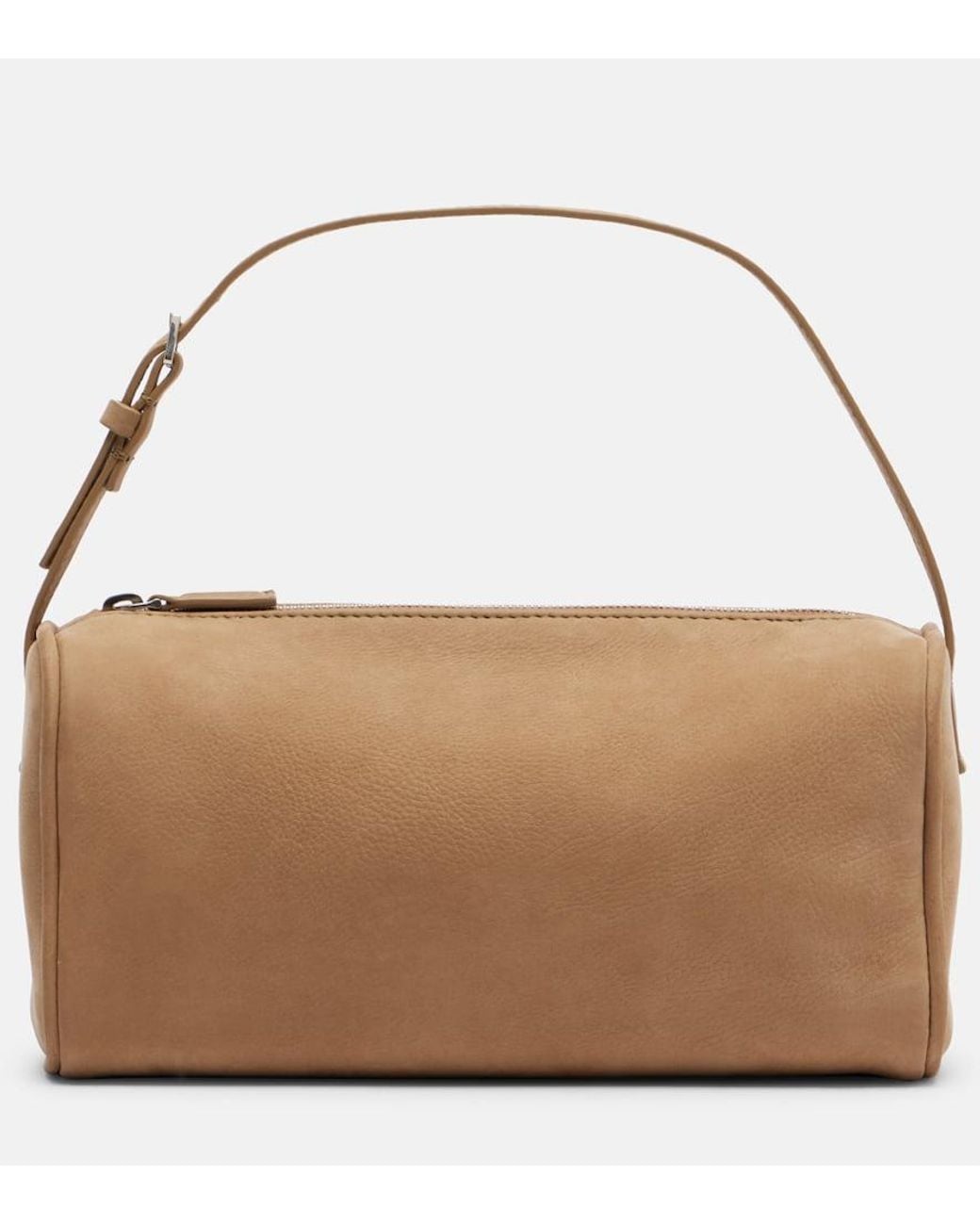
Its standing may have been forged on ready-to-wear, but it was the bags that turned it into a sweeping cultural phenomenon. These handbags from the row occupy a odd yet enviable position in the market: they manage to be at the same time stripped down almost to namelessness and unmistakable at a glance to those fluent in fashion. There is no visible logo on most styles, no branded hardware shouting for attention. Instead, identity is carried through silhouette, scale, and the particular drape of the leather.
Across the row’s bag offerings, a select few designs have achieved almost legendary standing. Margaux, with its soft, formless outline and signature pleating along the sides, turned into one of fashion’s most-searched bags the moment it was seen on Mary-Kate Olsen’s own arm. Shoppers researching where to buy The Row Margaux bag quickly learn that supply runs thin and resale prices often exceed retail, an obvious sign that wanting outstrips having. The bag comes in multiple sizes and leathers, and each variation carries its own waiting period depending on the particular retailer and time of year.
Among totes, The Row’s version stands as another cornerstone of the lineup, prized for its construction that is firm yet yielding and its capacity to go from photo sets to daily use without feeling wrong in either environment. These totes tend to prioritize clean lines and minimal hardware, driving home the label’s broader outlook that a bag should be judged on material and construction rather than branding.
For those compiling a row bags overview ahead of a purchase, it helps to understand that the brand doesn’t categorize its accessories the way most fashion houses do. The label avoids anointing one “it bag” per season. Instead, a rotating set of standout row bags — Margaux, Sofia, Ascot, and a few others — undergo occasional refreshes in color and size while retaining their original silhouette for years at a time. It’s a deliberate choice. The brand intends for its bags to act as investment pieces, not seasonal impulse buys.
Craftsmanship as the Central Selling Point
Any discussion of The Row circles back, sooner or later, to materials. The brand sources leather from top-tier European tanneries and collaborates with workshops devoted to handbag construction, frequently the very facilities relied on by storied luxury houses. This partly accounts for why the row bag category sits at such elevated price points — the leather alone, even before labor enters the equation, amounts to a considerable expense.
Build quality are of outsized importance here. Stitching done by hand, seam lines kept to a minimum, and fittings that are often custom-made rather than catalog-sourced all contribute to a end result that stands apart distinctly from assembly-line luxury products. Those who’ve compared a Margaux side by side with a similar bag from a more logo-centric house often note the leather’s weight and softness as the quickest tell of quality.
This same emphasis on high-grade materials extends to ready-to-wear as well, where cashmere sourced from specific regions and wool blends developed with Italian mills reinforce the brand’s elevated market position. The outcome is a lineup where consistent quality control shows up regardless of category, be it a coat, a shoe, or one of the row handbags.
Making Sense of a The Row’s Sale Events and Its Secondary-Market Worth
Markdowns from The Row are rare, and on the occasions a row sale surfaces, it is usually limited in scope compared to the deeper discounts common among other luxury labels. Tight control over distribution combined with relatively limited production runs means oversupply is rare for the label, so there’s less leftover inventory to discount when the season ends. Shoppers hoping to catch a significant price drop may need to wait for select multi-brand retailers to run their own promotional periods rather than expecting markdowns from The Row directly.
An interesting consequence of this scarcity is robust resale value. Certain bags, particularly the Margaux, have been known to hold or exceed their original retail price on the secondary market. That’s rare in the fashion world, where the majority of bags lose value the instant they leave the shop. That’s part of why so many customers regard buying from The Row as a lasting investment rather than a fleeting seasonal splurge.
When it comes to tracking down a row sale, patience and persistence generally serve shoppers better than acting with urgency. Following authorized stockists and signing up for notifications from department stores that carry The Row fashion line is generally more productive than expecting frequent promotions from the brand’s own channels.
Contrasting The Row’s Iconic Bag Styles
Understanding how the top row bags differ from one another helps clarify which style suits a given lifestyle or budget. Below, the table provides a broad comparison drawn from publicly available details on each style’s design intent, leaving out specific prices that shift by retailer, region, and season.
| Bag Style | Overall Form | Most Fitting Use | Hardware Style |
|---|---|---|---|
| Margaux | Relaxed, loosely shaped tote | Everyday carry, editorial styling | Understated, tone-matched |
| Classic Tote Bag by The Row | Crisp, architectural | Office use, travel, dressier occasions | Discreet metal touches |
| Sofia | Compact shoulder bag | Night-out use or pared-down everyday needs | Concealed clasp |
| Ascot | Structured top-handle | Business, formal occasions | Sculptural handle, no visible logo |
This kind of row bags overview is useful for narrowing down a first purchase, especially for shoppers new to the brand who may feel overwhelmed by how similar the silhouettes can appear at first glance. The differences, while subtle, are meaningful once a bag is in hand.
The Row à l’horizon 2026, Où en est la marque à ce jour?
Looking ahead to 2026, The Row reveals no evidence of relaxing its command over the quiet luxury conversation. The label persists in showing at Paris Fashion Week, a considered stance that places it alongside the most established European houses rather than among American contemporaries. The reward of this choice, settled upon years back, has become evident in both critical respect and commercial standing.
Distribution remains intentionally narrow. The Row is sold through its own flagship boutiques and a short list of authorized luxury retailers, a strategy that keeps inventory tight and demand high. Shoppers researching where to buy The Row Margaux bag in 2026 will find that authorized stockists remain the safest route, both for authenticity guarantees and for any future resale value the bag might carry.
Its impact on the broader fashion industry is by this point hard to overstate. Ever since 2006, The Row has upheld a consistency that few of the countless brands seeking to replicate its recipe — understated colors, outstanding fabric, branding-free design — have kept pace with. For those assembling a wardrobe around longevity rather than fleeting fads, the label continues to be one of the strongest examples that understatement, executed thoughtfully, can be its own form of luxury.
Bài viết liên quan

1xbet бонус: полное руководство для монгольских игроков
24/11/2026
Xem thêm
Cotton Craft Denim Tears Denim Tears Hoodie
24/11/2026
Xem thêm
Shop Valley Forever Now Easy Returns oversized vale fit
24/11/2026
Xem thêm
Vertical Drama Videos Basics Start Watching Now
24/11/2026
Xem thêm
Marc Jacobs The Tote Bag Care Guide Buyer Checklist Inside
24/11/2026
Xem thêm
Bình luận